
Orthoses & Bandages
Orthoses and bandages are medical devices that support, stabilise or offload joints and the spine after injuries, operations or in chronic conditions. Our catalogue covers orthoses for every part of the body — from the neck and shoulder to the knee, ankle and fingers.
-
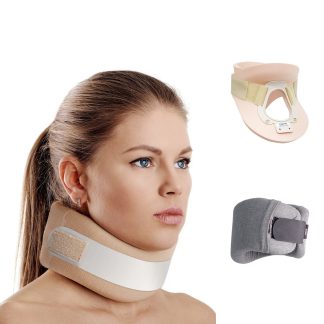
Cervical Braces
-
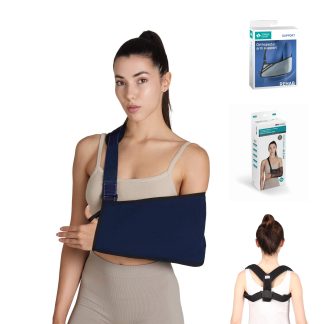
Shoulder
-
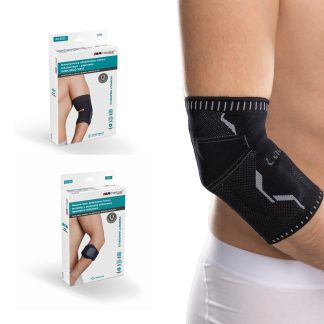
Elbow
-

Wrist
-
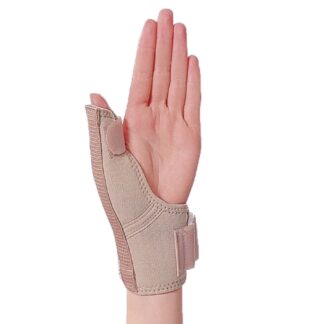
Fingers
-
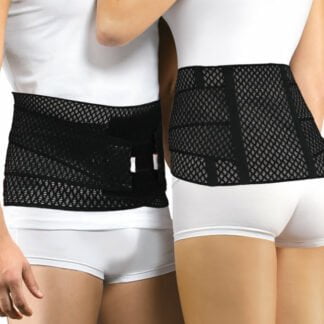
Spinal Orthoses
-
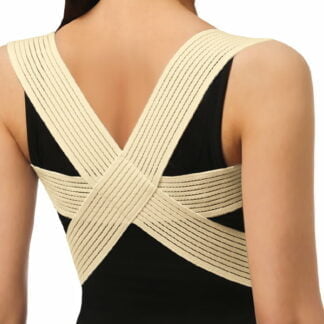
Posture Correctors
-
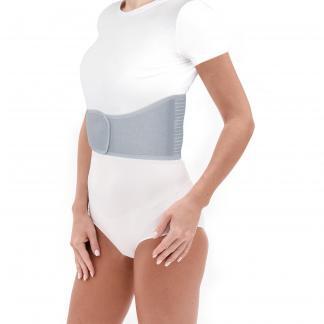
Ribs
-
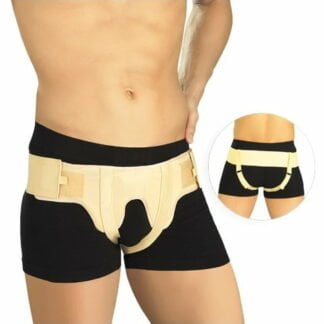
Abdominal & Hernia
-
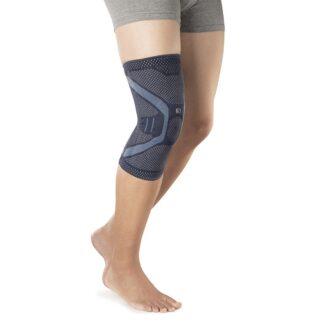
Knee & Hip
-
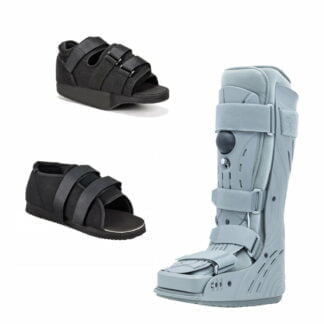
Walker Orthoses & Post-Operative Shoes
-
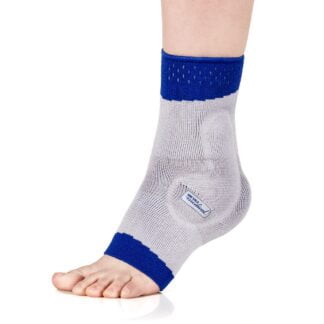
Ankle & Lower Leg
-
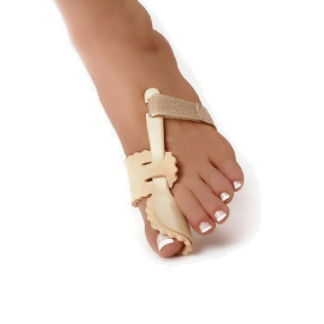
Toe Deformities
Orthoses and bandages — how to choose
An orthosis is a device that mechanically supports a particular part of the body. This section brings together all types of orthoses and bandages, grouped by body part. Below we explain how to choose the right one.
Choosing by body part
The easiest way to start is with the body part that needs support. In our catalogue, orthoses are divided into categories: cervical braces, shoulder orthoses, elbow orthoses, wrist orthoses, finger orthoses, spinal orthoses and supports, knee and hip orthoses, ankle and lower leg orthoses and abdominal and hernia supports. Posture correctors and aids for toe deformities are listed separately.
Choosing by rigidity
Whatever the body part, orthoses fall into three groups by rigidity. Soft orthoses made of elastic material provide light support and warmth for everyday loads or minor injuries. Semi-rigid orthoses are reinforced with stays or splints and restrict movement more — they are often used for rehabilitation. Rigid orthoses provide firm fixation or immobilisation, usually after operations or serious injuries. If you are unsure which rigidity you need, consult a doctor or our specialist.
When an orthosis is needed
Orthoses are used for rehabilitation after injuries (sprains, tears, fractures), after operations, in chronic joint conditions, to relieve pain, and for prevention during heavy loads or sport. A correctly chosen orthosis supports recovery and helps maintain mobility.
Quality and support
All the orthoses and bandages we offer are CE-marked medical devices. Our specialists will help you choose the right size and model. If you are unsure, contact us.
Frequently asked questions
How do I know which orthosis I need?
Start with the body part that needs support, then choose the rigidity to suit the situation — light support for everyday wear, medium fixation for rehabilitation or firm fixation after an operation. If in doubt, consult a doctor.
Can I wear an orthosis all day?
This depends on the type of orthosis and your doctor’s advice. Soft supportive orthoses can usually be worn longer, while rigid fixation orthoses are often used only for a set time.
How do I choose the right size?
Most orthoses come in several sizes determined by measuring the relevant body part. The exact size chart is given in each product description.
Can I buy an orthosis without a doctor’s referral?
Most orthoses can be bought freely. However, for serious injuries or after an operation, the type of orthosis and wearing regime should be agreed with a doctor.