
Compression Stockings & Arm Sleeves
Compression stockings create graduated pressure on the legs, help maintain blood circulation and reduce swelling and discomfort in venous insufficiency and varicose veins. What matters most is the right compression class and size.
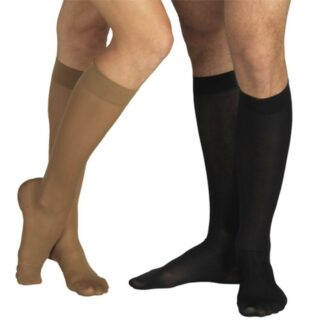
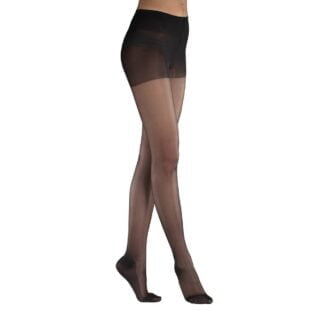
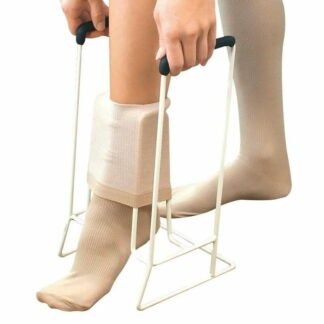
Compression stockings and arm sleeves — how to choose
Compression stockings are specially designed to create pressure on the legs and help maintain blood circulation, reducing discomfort and swelling. They come in various sizes, lengths and colours, but the most important thing is the compression class. The garment type is chosen by the affected vein segment — the top edge of the garment should overlap the affected area by 5–10 cm.
Compression classes
The main parameter of a compression garment is its compression class — the pressure the garment exerts at the ankle.
- Preventive garments (up to 18 mmHg) — during pregnancy; for at-risk occupations (prolonged standing or sitting, lifting weights); for people who are overweight or have a hereditary predisposition to vein disease. They can be bought without restriction.
- Compression class I (18–21 mmHg) — for “tired legs” syndrome; for early-stage venous insufficiency (numbness, “pins and needles”, swollen and aching ankles and calves towards evening, calf cramps); for preventing deep-vein thrombosis and swelling in the postnatal period; for preventing vein thrombosis in at-risk groups; for reducing swelling in varicose veins.
- Compression class II (23–32 mmHg) — for treating varicose veins without trophic changes; for treating acute thrombophlebitis and deep-vein thrombosis; for treating and preventing post-thrombotic syndrome; before and after sclerotherapy and phlebectomy; for post-traumatic swelling. Class II garments are recommended for use after consulting a doctor.
Graduated pressure
The medical effectiveness of compression garments is provided by the physiological pressure distribution: 100% at the ankle, 70% at the level of the upper third of the calf and 40% at the level of the upper third of the thigh.
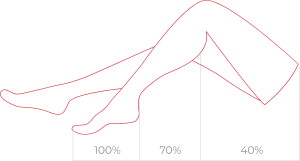
This graduated pressure decreases smoothly from the ankle upwards, encouraging blood flow towards the heart.
Types
By the affected vein segment, choose knee highs or tights.
Quality and support
All garments are CE-marked medical devices. Our specialists will help you determine the right size and class.
Frequently asked questions
Is a prescription needed for class II compression garments?
Before buying class II compression garments (CCL 2), a doctor’s recommendation is advised. No prescription or proof is required for purchase, but note that class II is therapeutic and, if used incorrectly, can harm your health.
Do compression stockings differ for men and women?
Usually not — the models are most often the same for both men and women. What matters is the right size and compression class, not gender. The right size is determined by measuring the leg at the indicated points.
Why are compression stockings needed during pregnancy?
During pregnancy, the volume of blood and fluid increases, which can cause swelling of the legs, ankles and feet; hormonal changes and weight gain encourage varicose veins. Compression stockings help look after the vein health of the mother-to-be. Before buying, it is advisable to consult a doctor. Varicose veins often disappear soon after childbirth.
My legs feel tired in the evening — will compression stockings help?
Work that involves standing all day (teachers, nurses, doctors, waiters, builders and others) can cause leg swelling, fatigue and pain by the end of the day. Compression stockings worn during the day help prevent swelling and fatigue. A doctor can recommend a suitable class.